
Executive Summary
What is happening right now goes beyond model releases or product launches. The largest AI companies are repositioning themselves as infrastructure owners, moving toward controlling the layer that everyone else will run on. The capital behind that shift is now going into physical things: power grids, cooling systems, data centers, and compute clusters.
The signals are visible at every level simultaneously, from the economics of a single AI agent loop to the water supply of a drought-affected region.
From Model Seller to Infrastructure Owner
Anthropic has announced a joint venture worth $1.5 billion with Blackstone, Goldman Sachs, and Hellman & Friedman, also backed by Apollo, General Atlantic, and Sequoia. The stated goal is the direct operational transformation of enterprises through AI-native services, with Anthropic engineers embedded inside mid-sized companies to redesign workflows and integrate AI into core operations. Fortune described the move as Anthropic taking direct aim at the consulting industry. Goldman Sachs projects roughly $765 billion in annual AI infrastructure spending in 2026, growing to $1.6 trillion by 2031 according to its Tracking Trillions report. SoftBank and OpenAI are building out Stargate, a $500 billion compute infrastructure project.
At the AWS Summit in Hamburg this spring, cloud was barely mentioned. Every session was about AI, and almost all of them were focused on agentic applications. That shift is worth noting. What Anthropic and others are building is closer to what Amazon did with cloud in the 2010s than to any previous software cycle: own the layer everything else runs on, and the integration work, the data flows, and eventually the operating logic of the businesses you serve come with it. Consulting firms still running on large teams and high day rates are facing a structural problem. Small teams producing the output of much larger ones is where the investment logic points.
Goldman Sachs Global Institute
The Token Bill Is Growing
A research paper published in April 2026 by teams including Stanford's Digital Economy Lab found that agentic coding tasks consume up to 1000 times more tokens than standard chat or reasoning interactions, with input tokens rather than output driving most of the cost. Token usage is also highly unpredictable: the same task can differ by up to 30 times in total tokens across separate runs, and higher usage does not translate into higher accuracy. Frontier models systematically underestimate their own token costs. Companies are now reporting that certain AI workflows cost more to run than the equivalent junior employee, a dynamic covered by both Axios and Fortune in recent weeks.
The economics are messier than the early narrative suggested. A developer working on a focused task is sometimes cheaper and more predictable than an agent loop consuming thousands of API calls on the same problem. At that token volume, the question is whether running it makes economic sense at all. People who understand how to get results with minimal inference overhead will have a real advantage, not through prompt tricks but through understanding the actual cost structure of the tools. There is also a domain question that tends to get skipped. Areas requiring contextual human judgment, HR being an obvious example, may produce worse outcomes at higher cost if AI substitution is pushed too hard. It is a question worth asking before deploying rather than after.
Capital Is Betting on Physical Infrastructure
SpaceX filed its public S-1 prospectus in May 2026 and is planning its IPO roadshow for June, targeting a valuation between $1.75 and $2 trillion. OpenAI is preparing to file confidentially and is targeting a listing in Q4 2026. Anthropic has signaled an October debut. Together the three offerings represent a concentrated AI IPO pipeline unlike anything seen before. SoftBank and Blackstone are committing large sums to data centers, energy procurement, and compute capacity. Power, GPUs, cooling systems, and capital are the actual constraints at this stage.
The pattern resembles early industrial investment cycles more than any previous tech wave. Railroads, electrification, early telecommunications: all required enormous upfront capital, produced unclear near-term profitability, and eventually concentrated returns among infrastructure owners. AI usage is already real and widespread, which is where the dotcom comparison breaks down. That does not mean current valuations are justified. OpenAI is projected to lose $14 billion in 2026 despite annualized revenue approaching $25 billion, and serious investors are raising concerns about monetization gaps. The underlying demand is real. Whether the capital structure around it is sustainable is a separate question.
The Cost Falls Somewhere
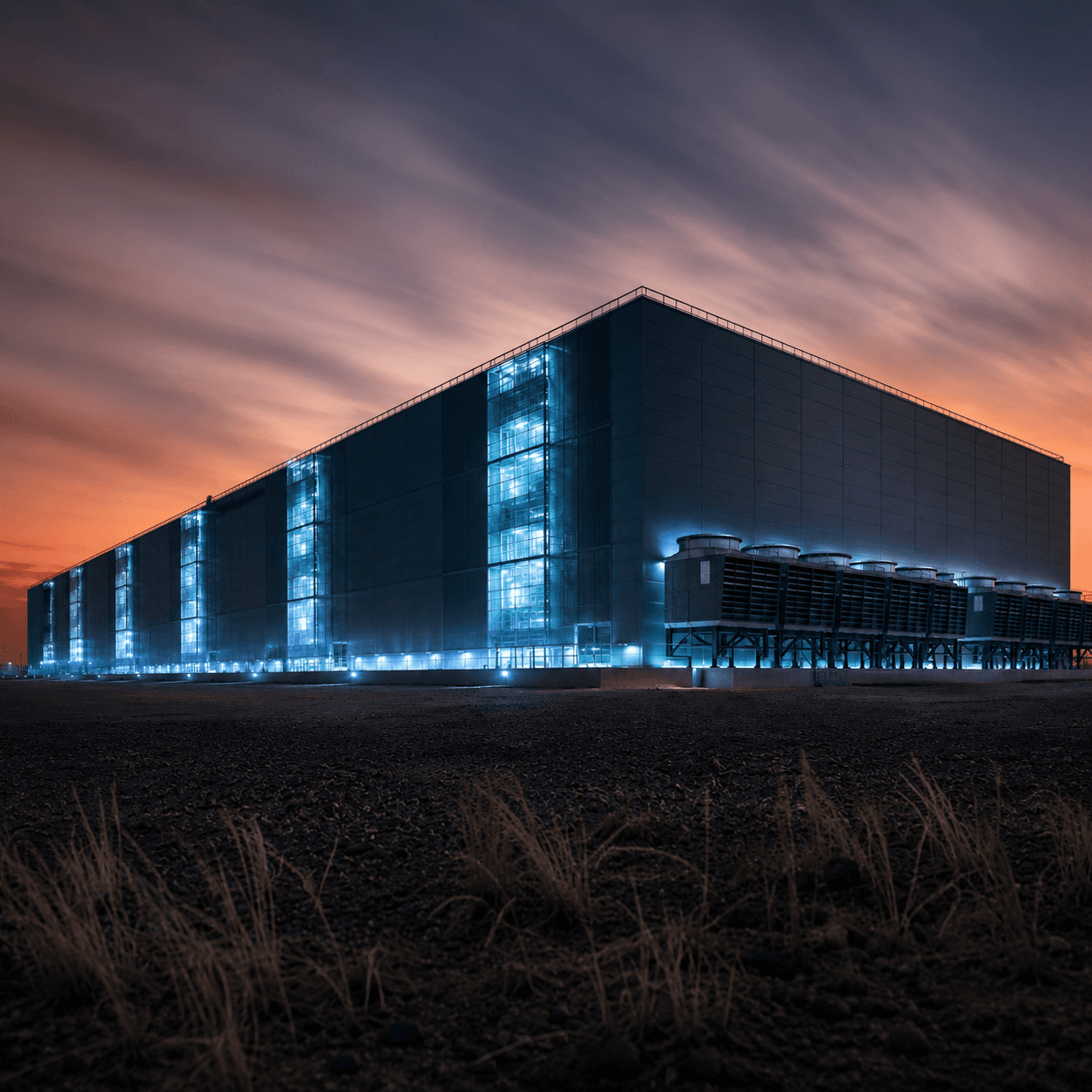
A University of Cambridge study published in early 2026 analyzed land surface temperature data from more than 6,000 data centers over the past two decades. It found an average local temperature increase of 2 degrees Celsius after a data center begins operations, with some extreme cases reaching 9 degrees. The warming effect extends up to 6.2 miles from facilities, affecting an estimated 340 million people globally. US data centers directly consumed 17.4 billion gallons of water in 2023, with up to 85 percent of that evaporating rather than returning to local water supplies. A University of Houston study projects data centers in Texas alone will use 399 billion gallons of water annually by 2030.
The economic structure behind this is worth understanding. Regions hosting data centers bear the local infrastructure costs while the value generated concentrates in the companies operating the AI systems. Short-term construction employment is real. Long-term operational jobs are few and highly automated. This follows the same structural logic as early industrial regions: local environmental and social costs, externalized economic returns. The industrialization parallel holds on the specifics. Wealth concentrated fast, environmental costs were treated as secondary, and the adjustments required of workers and communities lagged well behind the investment cycle. These impacts are not yet widely felt or understood, partly because metrics like regional water consumption remain abstract for most people, and partly because the dominant conversation is still about productivity and growth. The physical footprint of this infrastructure will be harder to ignore as it expands.
Lincoln Institute of Land Policy
Where It All Points
Every major infrastructure buildout produced a phase where capital accumulated in the hands of whoever owned the underlying layer, environmental costs were deprioritized, and broader adjustments came slower than the investment cycle. AI is tracking that same pattern. The technology works, the usage is real, and the capital behind it is not irrational. But the concentration of benefit and the distribution of cost are following a familiar and lopsided logic. Keeping that in view alongside the investment numbers is probably the most honest way to read what is currently happening.