
Executive Summary
Apple could soon lead the market for consumer AI, even if it did not build the core technology itself. On Monday, at its developer conference, Apple showed a new Siri. Many of the functions are not really new. Other AI services have offered similar things for some years. For Apple, this is probably not a big problem. Most people do not use the most advanced AI, and a lot of them do not want to. Apple often waits, watches what other companies do, and then releases an easier version for normal users. The new part is where the intelligence comes from. The system behind Siri is based on Google's AI, and Apple pays Google for it.
There is a bigger pattern in all four stories. For many years, advertising paid for things that felt free, like a working assistant, normal reach on social media, visits from search engines, and an audience that you could reach for nothing. Now each of these things slowly gets its own price. AI is part of the reason. Strong AI costs a lot to build, and people's attention is worth a lot of money. The companies that own the AI models and the big platforms make the new rules. Regulators are slow, so in the end normal users and small creators carry most of the cost.
The price of a working Siri
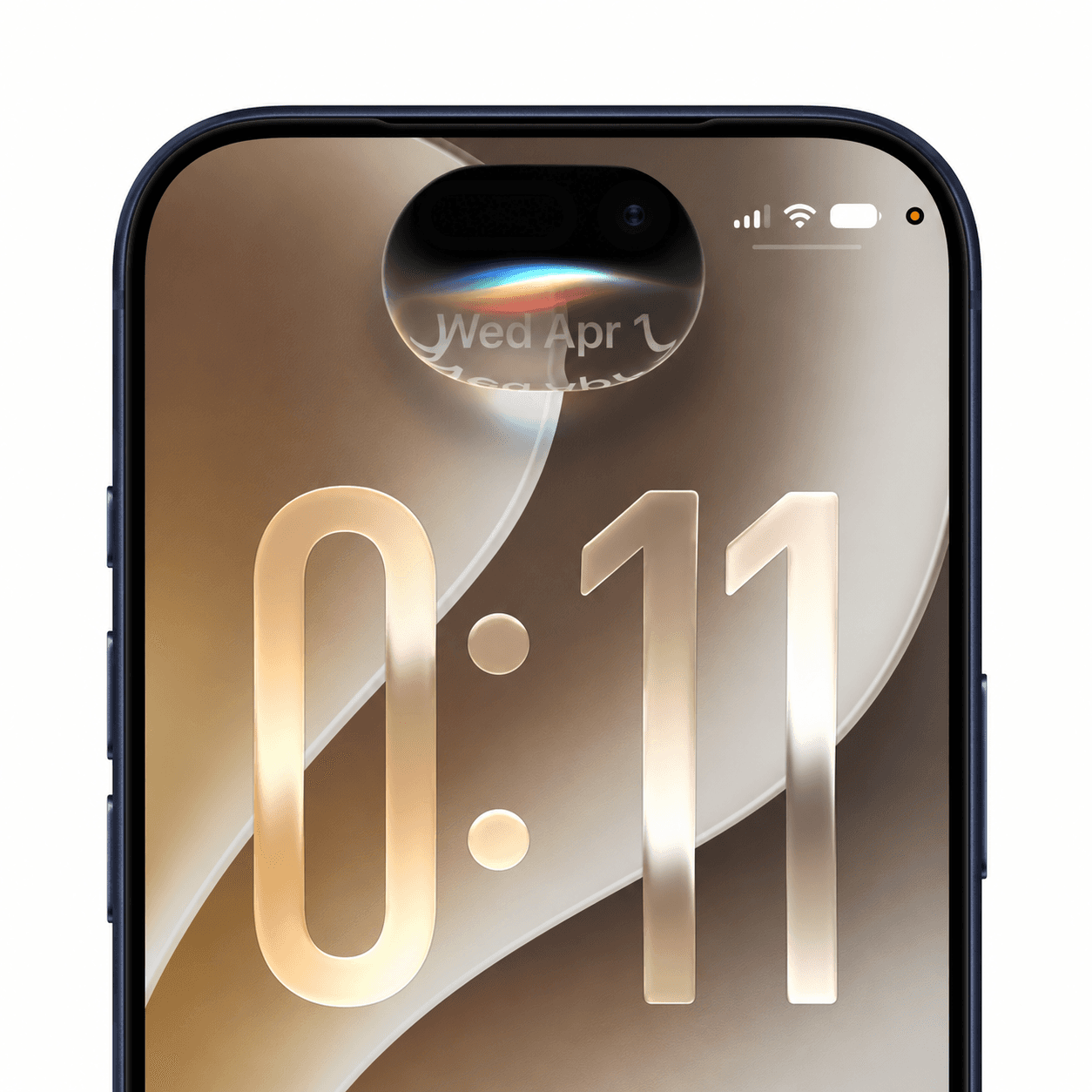
At the conference on Monday, Apple introduced a new version of Siri. Siri now comes as its own app with a chat function. It can read information from your messages, your mail, your photos, and other apps. It can also look at what is on your screen, and it can do tasks that need several steps in different apps. Easy requests stay on the phone itself. Bigger requests use larger Apple models in a system called Private Cloud Compute. The hardest requests go to the cloud, and Apple says that this part is based on its cooperation with Google.
This conference was also Tim Cook's last one as CEO. John Ternus, the head of hardware engineering, will take his place on September 1. Cook will stay in the company as executive chairman.
The new Siri needs a device that supports Apple Intelligence. For the iPhone, that means the iPhone 15 Pro and Pro Max, all iPhone 16 models, and the newer phones. The standard iPhone 15 and all older phones do not get the new Siri. Apple also saves its strongest on-device model for newer devices, for example the iPhone 17 Pro and the iPhone Air.
In the EU, the new Siri will not come to the iPhone, the iPad, or the Apple Watch with this year's software. It will only run on supported Mac computers and on the Vision Pro. Apple says that the Digital Markets Act is the reason, and it does not give a date for the iPhone or iPad. Apple explains that the law would make it open private data and app controls to other AI assistants, without the same safety rules. The European Commission has a different view. It says that the law does not stop Apple from launching, and that Apple simply did not deliver a solution that follows the rules.
This does not fit Apple's image very well. Apple often says that it controls every part of its products. But the central part of this launch comes from another company, Google. Even so, the plan can still work for Apple. Most users do not really care which AI model gives the answer, as long as the answer is good. They hold one button, they speak, and they get help. They do not need to install an app or change any settings. This is a simple idea, and it is a strong one. Apple has more than a billion devices in use, and many people trust the company. If the new Siri is good enough, Apple can win a lot of users only because Siri is already there from the start.
But there is a real risk too. For fifteen years, Apple has promised again and again that Siri will get better, but it has always stayed behind the best products. Two years ago, Apple gave almost the same promise and then released a version that did not work well. For that reason, Apple recently agreed to pay 250 million dollars and end a court case in the US. In that case, people said that Apple advertised Siri functions that were not ready yet. Apple did not accept any guilt. There is also a smaller problem. If you bought an iPhone 16 Pro because of Apple's AI advertising, you get the new Siri, but you do not get the full version, because the best on-device model is only for newer phones. And if you are in the EU, the most important feature of the year does not reach your iPhone or iPad at all, and there is no date for it. For these people, the question of guilt, Apple or the EU, does not change anything. The feature is just missing.
A switch for publishers
The UK Competition and Markets Authority has ordered Google to let publishers keep their content out of AI Overviews and AI Mode. The publishers can do this and still keep their normal place in the search results. The authority calls this the first rule of its kind in the world. Two more rules belong to the decision. First, websites can say no when Google wants to use their content to train its AI models. Second, Google has to add clear links to its sources in the AI answers. This decision was possible because the authority gave Google a special market status in search. With this status, it can set binding rules for a company that holds more than ninety percent of the search market in the UK. Most of the rules start six months after the decision is published, and the controls for single pages start within nine months.
People feel the effect of this every day. An AI Overview shows the answer directly at the top of the page. So there is no reason to open the original website, and that website loses its visitors. The new rule gives publishers an option to say no, but it does not give them much more. When a website leaves the AI summaries, it still does not get back the readers that it lost. The rule also works only in the UK. So the same article can be handled in one way for a reader in Manchester and in a different way for a reader in Munich. Most users do not see any of this. They only see, slowly over time, that there are fewer good independent websites, and that more answers come straight from Google.
A profile as consolation
Google is starting a new feature called Search Profiles. It is one page where publishers and creators can show themselves with a photo, a short text about them, and links to their website and their social media. The goal is to give them more visibility in the Discover feed. People can follow a profile and then get the newest articles, videos, and posts from this creator on the home screen of the Google app. When a creator claims a profile, Google can also build a Knowledge Panel if there was none before. At the moment, the feature only works in the United States. Google says that a wider release will come later.
The timing of this is important. Google gives creators a nicer page inside Google, while at the same time its AI summaries take traffic away from them. There are two problems here. The first problem is that you can only claim a profile if you already have enough followers on the big platforms. So the creators who can control how Google shows them are the ones who are already big. A small creator who cannot claim a profile gets none of this extra visibility, and so the difference between big and small creators grows. The second problem is that this feature, like the new Siri, starts only in the US and has no date for Europe. For readers here, it is something they can only watch for now. In the end, the effect is clear. The feature keeps the creators that Google needs inside Google.
Reach by subscription
Instagram Plus is now available for 3.99 euros per month. The new functions are small and made for daily use. For example, you can post longer stories, you can watch another person's story without appearing as a viewer, and you can change the look of your profile a bit more. Instagram Plus does not remove the ads. It is the cheapest level of a bigger system that Meta is testing. The system is called Meta One. Above Instagram Plus, there is a level for about fifteen dollars per month with a verified badge and protection against fake profiles. And there is a higher level for about fifty dollars per month that directly sells more visibility.
The Instagram feed already has a lot of ads and sponsored posts that users did not want. Instagram Plus does not change this, because all the ads stay. The level that sells visibility makes it worse. The accounts that are ready to pay for a better position, a bigger Follow button, and automatic follow invitations are the accounts that want to earn money. These are commercial channels and profiles for advertising and product placement. For them, this is just one more advertising cost. Because of this, the feed shows even more paid accounts in the top positions, together with the normal ads. The app is still free, but the question of who is seen now depends more and more on who pays.
One bill, spread around
If you put the four stories next to each other, you see the same movement in all of them. Apple uses the AI of a competitor because it could not finish its own AI in time. Meta starts to ask creators and companies to pay for more reach. Publishers have to fight only for the right not to be used for free. Google gives a profile page to the same creators that it puts under pressure, so that they stay close. In every case, the direction is the same, and the cost reaches the people at the end of the line. On its own, each story is not very big. But all together, they slowly change what users and creators accept as normal.